







If your senior dog seems to spend most of the day curled up and snoozing, you’re not alone in wondering whether something is wrong. The good news is that sleeping more is completely normal as dogs get older. The not-so-good news? Sometimes it’s a sign that something needs attention.
This guide breaks down exactly why older dogs sleep so much, what a healthy sleep pattern looks like, and the specific warning signs that mean it’s time to call your vet.
How Much Sleep Is Normal for a Senior Dog?
Adult dogs sleep between 12 and 14 hours a day on average. But once a dog crosses into senior territory — typically around 7 years old for large breeds and 9 years for smaller ones — that number can climb to 16 to 18 hours per day.
That’s a lot. But it’s also very normal. Aging changes how the body uses energy, and rest becomes far more important for recovery, digestion, and overall health. Think of it less as laziness and more as your dog’s body being smarter about conserving what it has.
Common Reasons Why Old Dogs Sleep More
1. Natural aging process
Metabolism slows down as dogs age. Their cells don’t regenerate as quickly, their joints take more effort to move, and their brain needs more rest to process the day. All of this adds up to longer sleep cycles and more frequent napping.
2. Joint pain and arthritis
One of the most common conditions in senior dogs is arthritis. When moving hurts, dogs naturally choose to move less. A dog that used to patrol the yard every hour might now prefer to stay on their bed most of the day. If your dog is also stiff when getting up, reluctant to climb stairs, or hesitant to jump, arthritis is very likely playing a role. How to Help an Arthritic Cat Climb Stairs
3. Hypothyroidism
An underactive thyroid is surprisingly common in dogs, especially as they age. It slows down nearly every body system, leading to excessive sleeping, weight gain, and a dull coat. A simple blood test from your vet can rule this out quickly.
4. Diabetes or other metabolic conditions
Senior dogs are more vulnerable to conditions like diabetes, kidney disease, and liver problems. Fatigue and increased sleep can be early symptoms of all three. If you’ve also noticed increased thirst or urination alongside the extra sleeping, that’s worth investigating. Why Is My Old Dog Drinking So Much Water?
5. Canine cognitive dysfunction (dog dementia)
Similar to Alzheimer’s in humans, canine cognitive dysfunction affects roughly 28% of dogs between 11 and 12 years old. One of the earliest signs is a disrupted sleep cycle — sleeping heavily during the day and then restless or confused at night. Signs of Dementia in Senior Dogs
6. Depression or reduced stimulation
Dogs that aren’t mentally stimulated enough will sleep out of boredom. If your senior dog’s walks have gotten shorter and their toy time has decreased, they may be sleeping simply because there’s nothing else going on. This is easily fixed — and it matters a lot for their quality of life.
Warning Signs: When Extra Sleep Becomes a Problem
Normal senior sleep looks like peaceful, comfortable rest. Your dog wakes up alert, eats normally, and is engaged when you call them. The following signs suggest something more than aging is at play:
- Sleeping significantly more than usual with no explanation (new medication, weather change, etc.)
- Difficulty waking up or extreme grogginess after sleep
- Sleeping in unusual places, like on a cold floor instead of their bed
- Loss of appetite alongside increased sleeping
- Whimpering or seeming uncomfortable while resting
- Confusion or disorientation when they wake up
- Sudden change in sleep pattern after previously being active
What You Can Do at Home
If your vet has given your dog a clean bill of health and the extra sleeping is simply age-related, there are a few things you can do to improve their quality of rest and daily life:
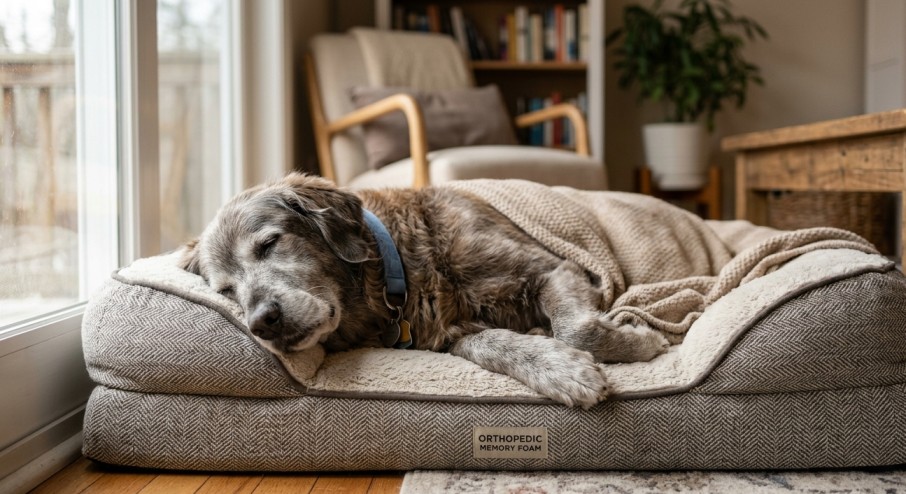
Orthopedic bed
- Memory foam supports aging joints and reduces pain during long rest periods.
Gentle daily walks
- Short, consistent movement keeps muscles active and improves sleep quality.
Mental enrichment
- Puzzle feeders and scent games keep the brain active without tiring the body.
Senior diet
- Higher protein, lower calories — formulated to support aging metabolism.
When to Visit the Vet
Schedule a vet visit if the increased sleeping came on suddenly, if it’s paired with other symptoms like weight changes or appetite loss, or if your gut is telling you something is off. Senior dogs should ideally see a vet every 6 months — conditions caught early are far easier to manage.
Q: How many hours a day should a senior dog sleep?
A: Senior dogs typically sleep between 16 and 18 hours a day. This is a normal increase from the 12–14 hours adult dogs sleep and is primarily driven by slower metabolism and reduced energy levels that come with aging.
Q: Is it normal for a 10-year-old dog to sleep all day?
A: Yes, in most cases. A 10-year-old dog is considered senior, and sleeping most of the day is typical for this age group. The key is to watch for changes — if your dog suddenly starts sleeping far more than usual, or seems lethargic even when awake, a vet check is a good idea.
Q: What medical conditions cause excessive sleeping in dogs?
A: Common conditions include hypothyroidism, diabetes, kidney disease, arthritis, anemia, heart disease, and canine cognitive dysfunction (dog dementia). If excessive sleep is paired with other symptoms like weight changes, increased thirst, or confusion, a vet visit is recommended.
Q: How can I tell if my old dog is sleeping too much?
A: Track their baseline. If your dog normally sleeps 14 hours and has jumped to 20+ hours with less engagement when awake, that’s a meaningful change. Also watch for difficulty waking, discomfort during rest, loss of appetite, or confusion after sleeping — these all warrant a vet visit.
Continue reading on this site